
Why CLT Modules Are Ideal for Garden Annexes and Garden Rooms
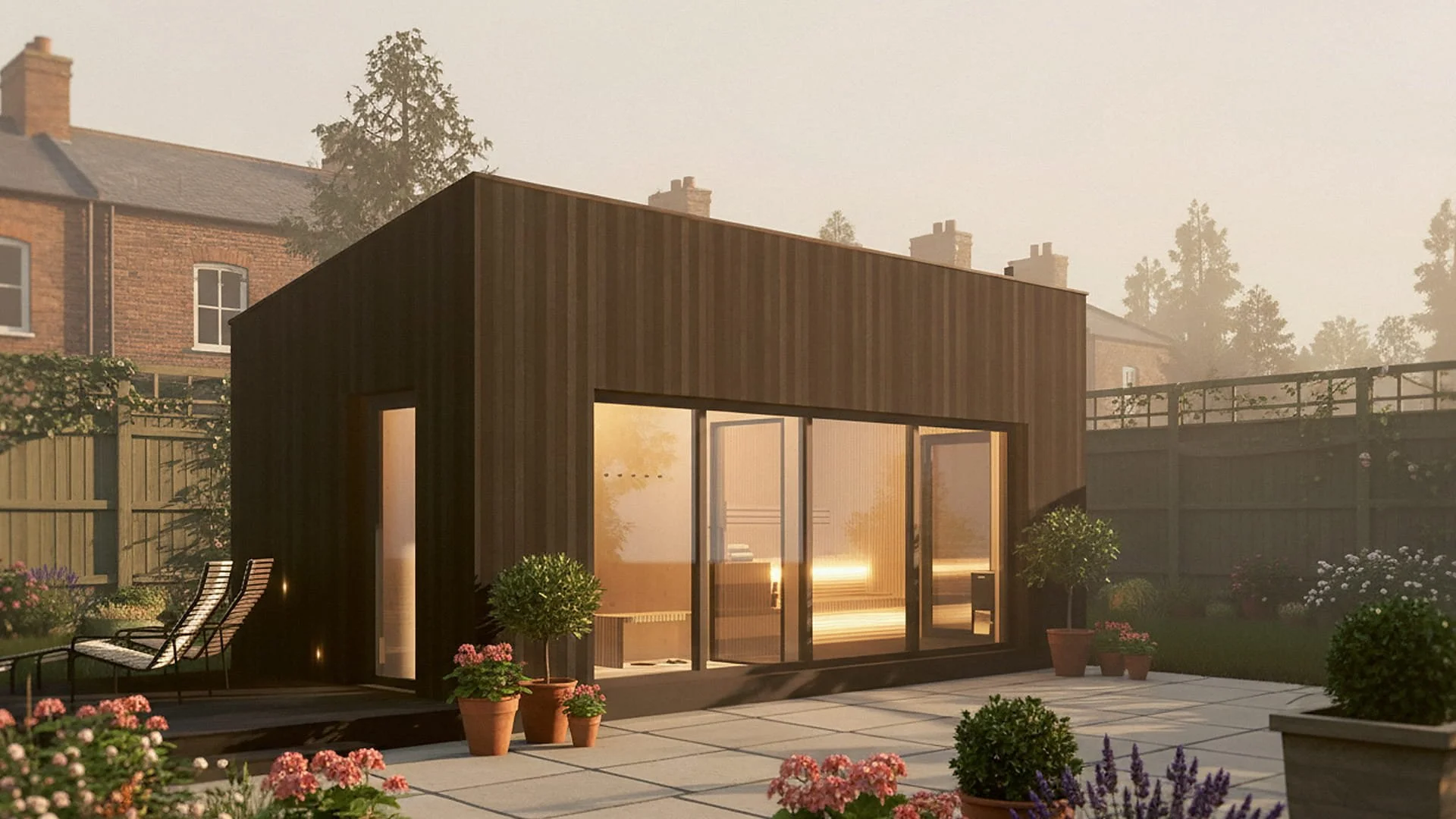
Garden annexes and garden rooms are no longer simple outbuildings. They are expected to function as fully self-contained living spaces, independent work environments, rental units or multigenerational accommodation. In the UK, these structures must balance regulatory compliance, structural integrity, energy efficiency and long-term durability within defined dimensional limits under caravan legislation.
Cross-Laminated Timber, commonly known as CLT, has emerged as one of the most effective construction systems for modular garden annexes and garden rooms. Its engineered strength, thermal performance and precision manufacturing characteristics make it particularly well suited to self-contained residential structures placed within private gardens.
What Is CLT and How It Works
Cross-Laminated Timber is an engineered wood product made by layering timber boards at perpendicular angles and bonding them under controlled pressure. This cross-laminated configuration creates solid structural panels capable of performing as load-bearing walls, floors and roof elements.
Unlike conventional timber frame construction, which relies on studs and infill insulation, CLT panels act as structural plates. This provides improved rigidity, dimensional stability and long-term performance. In modular garden annex construction, this means stronger buildings with reduced risk of movement, warping or structural fatigue over time.
CLT panels are precision manufactured using digital design and CNC machining. This ensures accurate dimensions and consistent quality control before the structure reaches site. For garden annexes and garden rooms, where space is often constrained, precision is critical.
Structural Strength Within Caravan Act Dimensions
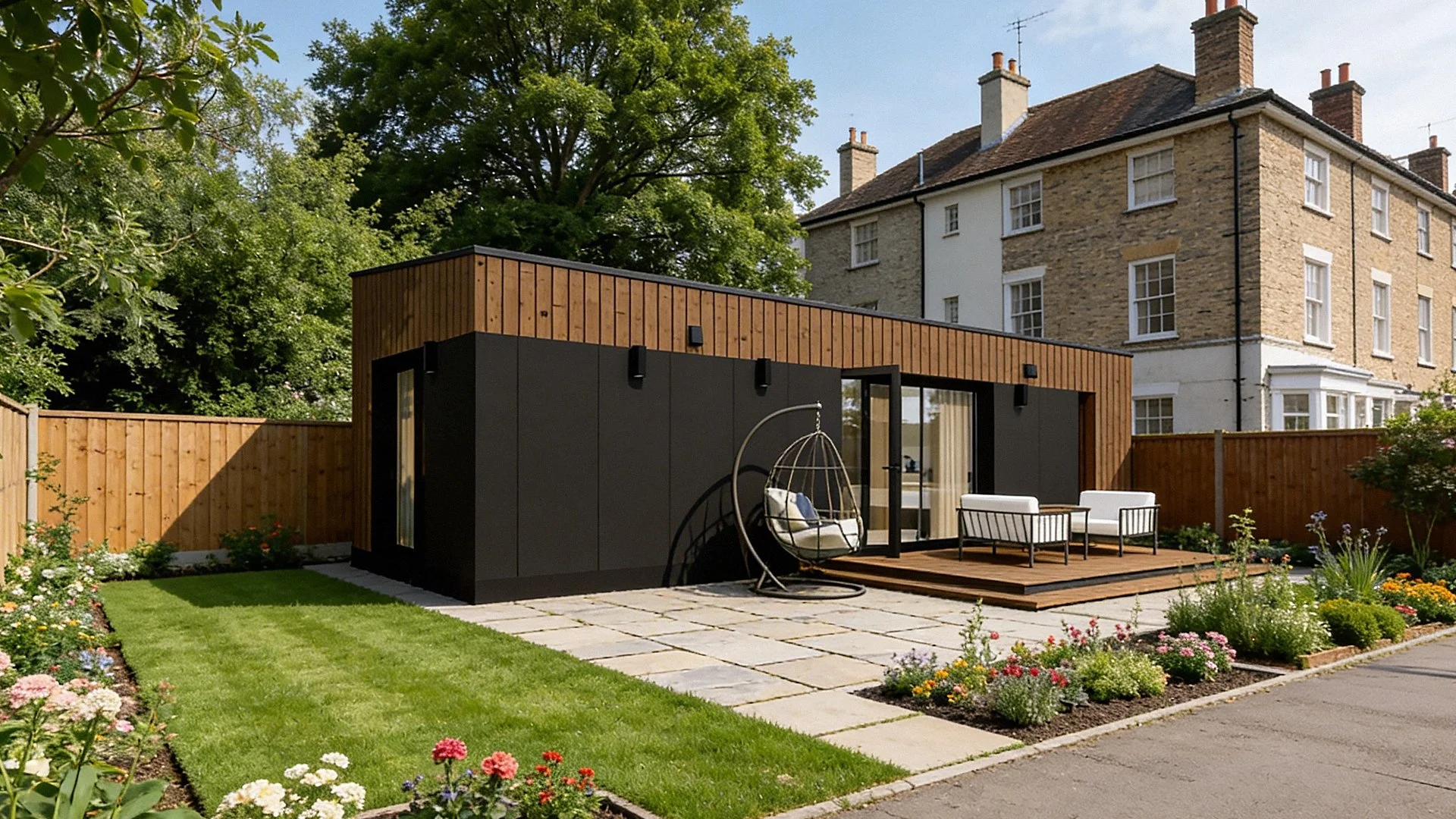
In the UK, many garden annexes are built to comply with caravan legislation. To qualify as a caravan, the structure must meet specific dimensional limits and mobility criteria. These include maximum length, width and internal height, along with the ability to be transported in sections and assembled on site.
CLT modular construction is particularly well suited to this framework. Panels can be engineered within defined dimensional parameters while still delivering residential-grade structural strength. Because CLT offers a high strength-to-weight ratio, modules can be transported efficiently and installed within garden settings without compromising stability.
This makes CLT modules ideal for:
Granny annexes built under Caravan Act limits
Self-contained garden lodges
Modular home offices
Rental annexes
Multigenerational living spaces
The ability to maintain compliance without sacrificing performance is a significant advantage over traditional masonry garden builds.
Thermal Performance for Year-Round Living
One of the key differences between a basic garden room and a residential-grade garden annexe is thermal performance. Many garden rooms are suitable only for seasonal use. In contrast, a properly designed CLT garden annexe can provide year-round comfort comparable to a permanent home.
CLT contributes to improved energy efficiency through:
Reduced thermal bridging
Improved airtightness
Layered wall assemblies
Enhanced moisture control
When combined with high-performance insulation systems and compliant construction detailing, CLT modules can meet residential performance standards such as BS 3632. This ensures that garden annexes remain warm in winter and comfortable during summer months.
For homeowners, this translates into lower heating costs, improved internal comfort and long-term energy efficiency.
Moisture Control and Long-Term Durability
Garden annexes are exposed to variable weather conditions. Rain, humidity and seasonal temperature changes can affect structural materials over time. Moisture management is therefore a critical consideration.
CLT panels are manufactured from kiln-dried timber under controlled conditions. When properly detailed with vapour control layers and breathable membranes, they provide stable moisture performance. The cross-laminated structure reduces movement and helps prevent distortion associated with poorly designed timber systems.
In addition, the solid panel configuration provides improved acoustic insulation and structural resilience. This is particularly important for garden rooms used as home offices or rental annexes, where sound control enhances functionality.
Compared to lightweight stud garden buildings, CLT-based annexes offer greater structural longevity and reduced maintenance demands.
Speed of Installation and Reduced Disruption
Garden annex construction can be disruptive to family life if prolonged on site. Traditional brick or block builds require extended groundwork, masonry, curing times and weather dependency.
CLT modular construction significantly reduces installation timelines. Panels or modules are manufactured off-site in controlled factory environments. Once delivered to site, assembly can be completed quickly with minimal heavy construction activity.
The advantages include:
Reduced build time
Less disruption to the main household
Predictable installation schedules
Lower on-site labour intensity
Cleaner construction process
For homeowners seeking a garden annexe for elderly parents or adult children, speed of installation can be a decisive factor.
Sustainable Construction and Environmental Responsibility
Sustainability is increasingly important in residential construction. Garden annexes built with CLT support lower embodied carbon compared to many traditional construction systems.
Timber acts as a carbon-storing material, and when responsibly sourced, it represents a renewable building resource. Off-site modular manufacturing also reduces material waste and improves construction efficiency.
For homeowners conscious of environmental impact, CLT modular garden annexes provide:
Reduced carbon footprint
Energy-efficient performance
Sustainable material sourcing
Lower long-term operational energy use
This combination aligns with modern expectations around responsible home improvement.
Design Flexibility and Contemporary Aesthetics
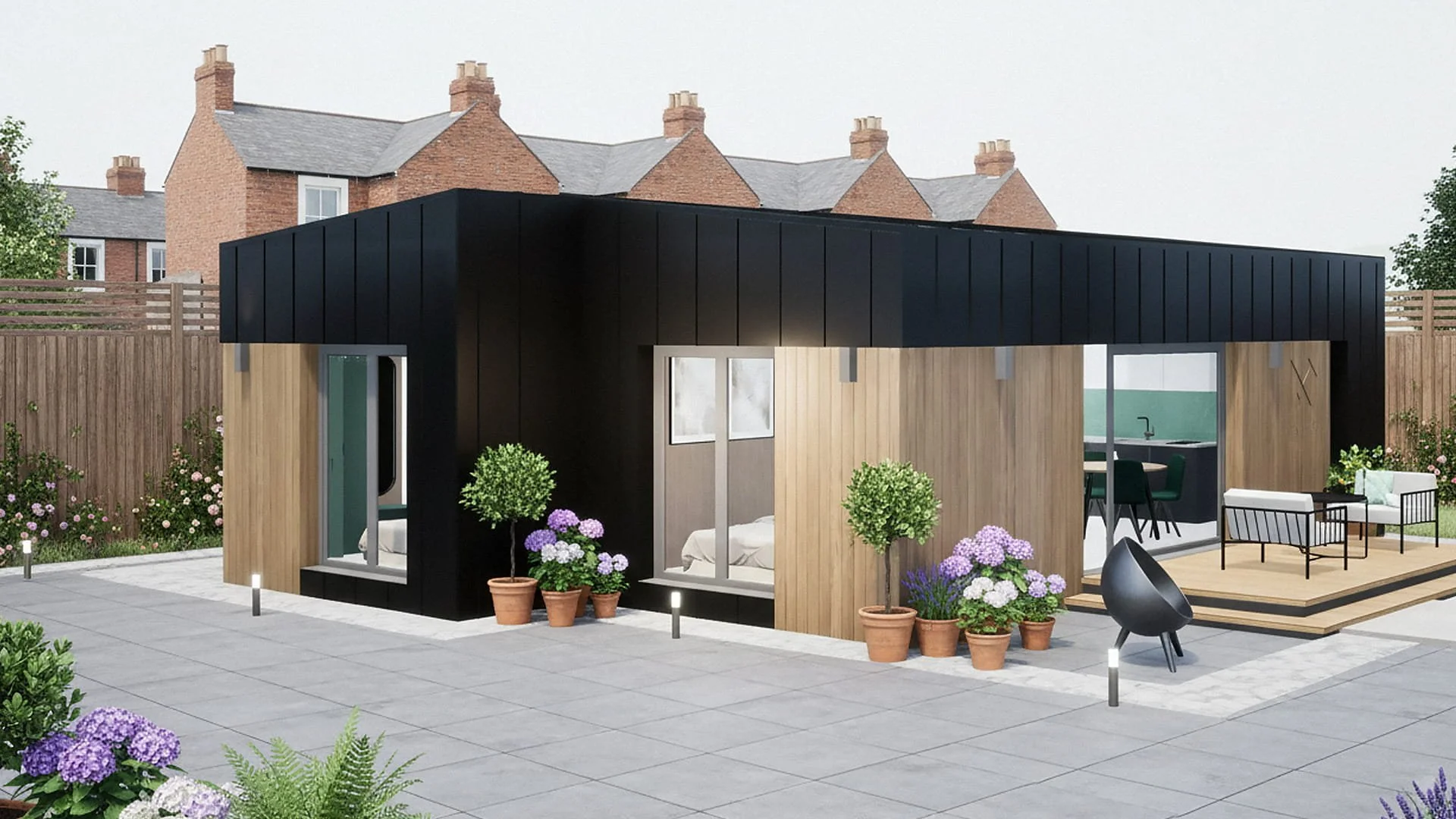
Garden annexes must integrate visually within existing properties. CLT modules support flexible design options and contemporary architectural forms.
Because CLT panels can span larger distances than conventional stud systems, internal layouts can be more open and adaptable. Open-plan living areas, integrated kitchen zones and efficient storage layouts are easier to achieve.
Externally, CLT garden annexes can be finished with:
Natural timber cladding
Composite façades
Metal standing seam finishes
Rendered external systems
This allows homeowners to align the garden annexe with the architectural character of the main dwelling.
Increased Property Value and Rental Potential
Self-contained garden annexes can increase property value and open opportunities for rental income. A properly constructed annexe with kitchen, bathroom and independent services can serve as:
Accommodation for elderly relatives
Space for adult children
Guest suite
Long-term rental unit
Short-term holiday let
The quality of construction directly influences long-term asset value. CLT-based modular annexes offer structural durability and residential-grade performance, supporting higher perceived value compared to basic garden buildings.
When built to BS 3632 standards while remaining within caravan classification limits, these annexes combine compliance with long-term usability.
Compliance with Residential Standards
While caravan legislation governs classification, residential performance standards such as BS 3632 define insulation, structural and durability benchmarks.
CLT modular systems can be engineered to meet these requirements. This ensures:
Improved thermal efficiency
Enhanced acoustic performance
Moisture resistance
Structural stability
For homeowners, this means that the garden annexe functions as a true extension of the home rather than a temporary outbuilding.
Future-Proofing Garden Living Spaces
Housing pressures, rising care costs and flexible working trends continue to increase demand for garden annexes and modular garden rooms. Investing in a structurally robust and energy-efficient construction system future-proofs the property.
CLT modules provide long-term resilience and adaptability. As regulations evolve and energy efficiency requirements tighten, high-performance timber construction remains aligned with sustainable building practices.
A garden annexe built with CLT is not simply an additional structure. It is a durable, compliant and adaptable living environment designed for changing household needs.
How Celtio Supports CLT Garden Annex Construction
Celtio designs and manufactures modular garden annexes and garden rooms using advanced CLT construction and precision off-site manufacturing. Each structure is engineered within Caravan Act dimensional limits while meeting residential performance standards such as BS 3632, ensuring year-round comfort and compliance.
By combining sustainable timber systems with controlled factory production, Celtio delivers self-contained garden annexes that balance structural integrity, thermal efficiency and efficient installation. From compact modules to larger multi-bedroom configurations, each model is designed to integrate seamlessly within residential garden settings while providing long-term durability and practical independent living space.
